
Not every senior needs to move into assisted living permanently, at least not right away. Short term assisted living offers a flexible alternative. Sometimes a family needs a few weeks of help after a hospital stay. Sometimes a caregiver desperately needs a break. And sometimes the smartest move is a trial stay before committing to anything long-term.
Short term assisted living covers all of these situations: a temporary stay in an assisted living community, typically lasting from a few days to a few months, with the same care, meals, and support as full-time residents receive. This guide explains how short-term stays work, what they cost, and how to arrange one in the Victoria, TX area.
What Is Short Term Assisted Living?
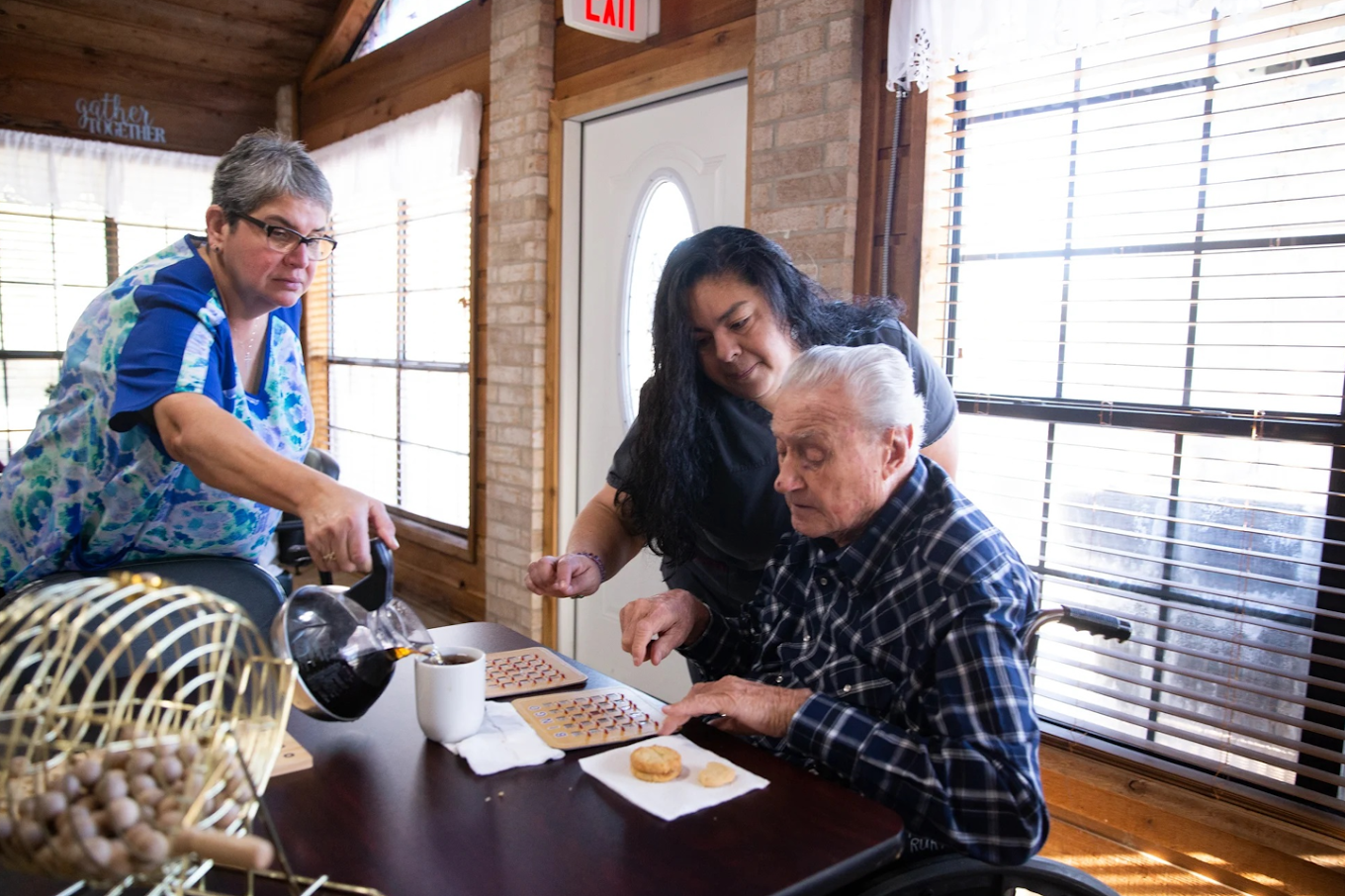
A short-term stay means your loved one moves into the community temporarily and receives the full daily routine: a private or companion room, three home-cooked meals a day, medication management, personal care assistance, housekeeping, laundry, and activities. The difference from a permanent move is simply the timeframe and the billing, which is usually calculated by the day or week rather than by the month.
Think of it as assisted living without the long-term commitment. The care is the same. The flexibility is the point.
4 Reasons Families Choose a Short-Term Stay
1. A trial stay before deciding. This is one of the smartest uses of a short-term stay. Instead of agonizing over whether assisted living is right, your parent tries it for two to four weeks. They experience the food, the caregivers, the daily rhythm, and the other residents firsthand. Most families say the decision makes itself after a trial. If it is not the right fit, nobody has signed a long-term agreement.
2. Recovery after a hospital stay or surgery. Discharge planners often recommend a supported setting after procedures like hip replacement or a cardiac event. A short-term stay provides medication management, mobility help, nutritious meals, and watchful eyes during the weeks when complications are most likely. It bridges the gap between hospital and home far more safely than going straight home alone.
3. A break for the family caregiver. Caring for an aging parent full-time is exhausting, and burnout helps no one. A short-term stay gives the primary caregiver a genuine break: a vacation, a medical procedure of their own, or simply a few weeks to rest and recover. Your loved one is safe, supervised, and well-fed while you recharge.
4. Seasonal or situational needs. Some families use short-term stays during winter months when a parent’s home is hard to heat or navigate, or while home repairs make the house temporarily unlivable. Life is unpredictable; short-term stays flex with it.

How Short-Term Stays Work
Minimum stays. Most communities set a minimum, often one to two weeks. This gives the resident time to settle in and gives staff time to learn their needs. Ask about the specific minimum when you call.
The assessment. Even for a short stay, the community will complete a brief assessment: medications, mobility, dietary needs, and any cognitive concerns. This is how they build the care plan and confirm they can meet your parent’s needs safely.
What is included. A short-term resident typically receives everything a full-time resident does: room, meals, personal care, medication management, housekeeping, laundry, and activities. Confirm the details, since a few communities limit certain services for short stays.
Billing. Short-term stays are usually billed at a daily or weekly rate, which runs higher per day than the monthly rate for permanent residents. That is normal: the community absorbs turnover costs and a shorter commitment. Ask for the daily rate, any one-time admission or assessment fees, and what care level your parent falls into.
Availability. Short-term rooms depend on current occupancy. In a small 16-bed home like ours, there may be only one or two rooms available for short stays at a time, so calling ahead matters, especially around holidays when demand peaks.
When Should You Start Planning a Short-Term Stay?
If the need is elective, like a trial stay, start the conversation four to six weeks out. That gives you time to tour, complete the assessment, and pick dates that suit the family. If the need is urgent, like a hospital discharge next week, call anyway. Communities deal with quick turnarounds regularly, and a good one will tell you honestly whether it can accommodate your timeline. Either way, earlier is easier: the most flexible rooms go first, and holiday periods fill up fast.
What to Pack for a Short-Term Stay
Keep it simple. Your parent is not moving house; they are settling in for a few weeks:
- Two weeks of comfortable clothing, plus a warm layer
- All medications in original bottles, with a current medication list
- Toiletries and personal grooming items
- Glasses, hearing aids, dentures, and chargers
- A few familiar items: family photos, a favorite blanket, a book
- Insurance cards and emergency contact information
- Any mobility aids: walker, cane, or wheelchair
Label everything with your parent’s name. In a shared laundry, labeled clothing comes back to the right room.
Short-Term Stays vs. Respite Care: What Is the Difference?
The terms overlap, and honestly, many communities use them interchangeably. As a rough guide: “respite care” usually emphasizes relief for the caregiver and tends toward shorter stays (days to a couple of weeks), while “short term assisted living” is the broader term covering trial stays, recovery stays, and respite alike.
If your main need is caregiver relief specifically, read our guide to respite care in Victoria, TX for more detail. Either way, the conversation with the community is the same: your situation, your timeframe, your parent’s needs.
Short Term Assisted Living FAQs
How long can a short-term stay last? Anything from a few days to a few months. Most fall between two and twelve weeks. If the stay extends, many communities simply convert it to a regular residency.
How much does a short-term stay cost? Daily rates vary by care level and location, but expect the per-day cost to run higher than the equivalent monthly rate. Ask for the daily rate and any one-time fees in writing before committing.
Is a short-term stay covered by insurance? Generally no, not by standard health insurance or Medicare. Long-term care insurance sometimes covers short stays once benefit triggers are met. Most families pay privately.
Can a short-term stay become permanent? Yes, and it happens often. A trial stay that goes well frequently converts to a permanent move, which is exactly why trial stays are so valuable: the decision is based on experience, not guesswork.
What if my parent needs more care than the community can provide? A responsible community says so upfront during the assessment. Ask what happens if needs change mid-stay and how transitions to higher care are handled.
For help finding local aging resources beyond our community, the Eldercare Locator for local aging resources connects families with services by zip code.
Arrange a Short-Term Stay in Victoria, TX
Whether you need a trial stay, a safe landing after surgery, or a well-earned break from caregiving, a short-term stay gives your family room to breathe. Silver Serenity Assisted Living in Victoria, TX offers short-term stays in our 16-bed home, with the same personal care, home-cooked meals, and 24/7 staff our full-time residents receive. Call (361) 579-0784 to check availability and talk through your situation. We serve families from Victoria, Cuero, Edna, Goliad, Port Lavaca, Refugio, and Hallettsville, and we will give you a straight answer about timing and cost. Contact us today.