
Watching someone you love struggle with everyday tasks is what leads most families to living assistance services. Cooking, bathing, remembering medication, even walking safely across a room can suddenly feel risky. If you’ve reached this point, you’re probably trying to figure out what kind of help actually makes sense, and how it’s different from moving into a facility.
Quick answer: Living assistance services are professional caregiving support delivered in a senior’s own home. This includes help with bathing, meals, medication, mobility, and companionship, without requiring a move. They differ from an assisted living facility (a residential community) and a nursing home (24 hour medical care), and for many families, they’re the more affordable, less disruptive first step.
This guide from Silver Serenity Assisted Living walks through what these services actually include, how they compare to other senior care options, and how to know when it’s time to start.
What Are Living Assistance Services?
Living assistance services are a form of home based senior care focused on daily support rather than medical treatment. A trained caregiver comes to a senior’s home to help with:
- Bathing, grooming, and dressing
- Meal preparation and light housekeeping
- Medication reminders
- Mobility support and fall prevention
- Companionship and everyday conversation
The goal is quality of life, not clinical treatment. Most seniors who use this kind of support are still fairly independent. They just need a consistent hand with the tasks that have become harder with age. Families often start looking into it after a fall, a hospital stay, a dementia diagnosis, or simply noticing that a parent seems more forgetful or unsteady than before.
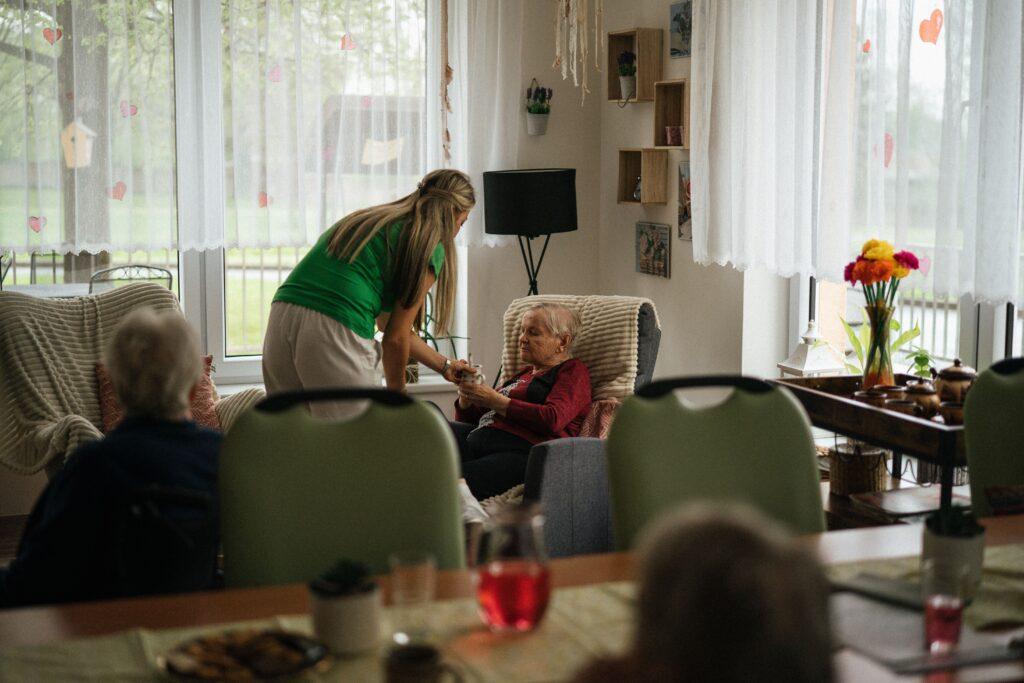
Living Assistance Services vs. an Assisted Living Facility
This is the comparison most families get stuck on, so here’s the short version.
An assisted living facility is a residential community. Seniors move in full time and receive help with daily tasks, meals, and social activities from onsite staff, along with round the clock access to support.
Living assistance at home brings a caregiver to the senior’s own house or apartment. There’s no move, no new environment, and no giving up the neighborhood, garden, or bedroom they’ve had for years.
| Living Assistance at Home | Assisted Living Facility | |
| Where care happens | Senior’s own home | Residential community |
| Cost structure | Pay for hours of care used | Flat monthly rate |
| Environment | Familiar, unchanged | New, shared with other residents |
| Best for | Seniors who need help with specific tasks | Seniors who want built in community and staff onsite |
For seniors who value independence and familiar surroundings, staying home with the right support is often the more comfortable, more affordable path. It also tends to be easier on family caregivers, since a licensed professional shares the load instead of the whole responsibility landing on one adult child or spouse.
Assisted Living vs. Nursing Home: What’s the Real Difference?
People use these terms interchangeably, but they’re not the same thing, and mixing them up can lead to paying for more (or less) care than someone actually needs.
Assisted living fits seniors who need help with daily activities, like bathing, dressing, and meals, but aren’t managing a serious medical condition. A nursing home, by contrast, provides 24/7 medical supervision from licensed nurses, and is built for residents with chronic or complex health needs.
The line between the two often comes down to one question: does this person need help with living, or do they need ongoing medical treatment? A lot of families jump straight to picturing a nursing home when what their loved one actually needs is far simpler, consistent help at home with everyday tasks.
Types of Assisted Living Support at Home
Care isn’t one size fits all, and it shouldn’t be. Depending on what a senior needs, support can include:
Personal Care
Help with bathing, grooming, dressing, and mobility. This is usually the starting point for families new to home care.
Companion Care
Sometimes the biggest gap isn’t physical, it’s emotional. Companion care focuses on conversation, engagement, and reducing isolation, which research consistently links to better health outcomes in older adults.
Medication Management
Missed or doubled up medication doses are one of the most common, and most dangerous, issues for seniors living alone. A caregiver can build a simple, reliable reminder system.
Meal Preparation and Light Housekeeping
Good nutrition and a clean, tidy home reduce fall risk and support better overall health.
Respite Care
Family caregivers need breaks too. Short term respite support gives an exhausted spouse or adult child time to rest without worrying about safety at home.
How Silver Serenity Assisted Living Helps
At Silver Serenity Assisted Living, we build care plans around the actual person, not a generic checklist. Every family’s situation looks different. Some need a few hours of help a week, others need a consistent daily caregiver relationship.
Our team can walk you through exactly what living assistance would look like for your specific situation, whether that means occasional help at home, more comprehensive daily support, or guidance on when an assisted living facility might actually be the better fit. If you’re comparing your options, we’re happy to talk it through with no pressure.
Living Assistance Services: Signs It Might Be Time for Care
It’s not always obvious when to bring in help. Watch for:
- Skipped meals or noticeable weight loss
- Missed medication doses or confusion about dosages
- Unexplained bruises or a recent fall
- A messier home than usual, or piling laundry and dishes
- Withdrawing from friends, hobbies, or phone calls
- Memory lapses or confusion in familiar places
- Difficulty with stairs, standing, or walking short distances
Noticing two or more of these is usually a sign worth acting on. Early support often prevents a small issue from turning into a health emergency, and it’s a big part of what lets someone continue aging in place safely, in the home they already know. The National Institute on Aging offers research-backed guidance on aging in place safely.

How to Choose the Right Care Option
- Start with a needs assessment. Write down exactly what your loved one struggles with day to day before comparing options.
- Ask about flexibility. Good care should scale up or down as needs change, not lock your family into a rigid plan.
- Talk to your loved one. Their comfort and preference matter as much as logistics. Many seniors feel more at ease staying home than moving somewhere new.
- Compare costs honestly. Get real numbers for both home based care and a residential facility, and ask about Medicaid or private pay options.
- Check caregiver consistency. Ask whether the same caregiver returns each visit. Consistency builds trust and improves quality of care.
Living Assistance Services: Making the Right Choice
Choosing care for someone you love is never a small decision. Whether that means living assistance at home, a move into an assisted living facility, or weighing assisted living against a nursing home for more complex medical needs, the right choice is the one that actually fits your loved one’s daily life, not just a category on a brochure.
At Silver Serenity Assisted Living, we’re here to make that decision easier. Reach out to our team today to talk through your options and find the right kind of support for your family. Visit silverserenityassistedliving.com to get started.
Frequently Asked Questions
What is the difference between living assistance services and an assisted living facility?
Living assistance at home brings a caregiver to a senior’s own home, while an assisted living facility means moving into a residential community with onsite staff and shared amenities. Both provide daily support, but home based care lets seniors keep their independence and familiar surroundings.
Assisted living vs. nursing home, how do I know which one my parents need?
If your parent needs help with daily tasks like bathing, dressing, or meals, assisted living level support is usually enough. A nursing home is typically needed only when there’s a serious medical condition requiring daily nursing supervision.
Is home based care cheaper than an assisted living facility?
Often, yes. Home based care is usually billed by the hours needed, while a facility charges a flat monthly rate covering housing and meals. Families with lower care needs frequently find home based support more affordable.
What are the warning signs that someone needs home care services?
Common signs include missed medications, unexplained falls, weight loss, a messier home than usual, and social withdrawal. Noticing two or more of these is a good reason to start the conversation.
Can living assistance at home be adjusted as needs change over time?
Yes. One of the biggest advantages of home based care is flexibility. Support can increase or decrease as needs change, without the disruption of switching facilities.