
Finding the right memory care Victoria TX community starts with knowing what quality looks like. When an Alzheimer’s or dementia diagnosis enters your family, life changes in ways no one can fully prepare you for. Suddenly you’re not just a spouse, daughter, or son, you’re a caregiver, an advocate, and a researcher, trying to make one of the biggest decisions of your loved one’s life while running on worry and too little sleep.
If you’re searching for memory care Victoria TX, whether you live in town or you’re driving in from Cuero, Port Lavaca, Edna, or Goliad, this guide will walk you through what memory care really is, the signs that it’s time, what it costs in Victoria in 2026, what to look for on tours, and the seven questions that reveal which community truly understands dementia care.
What Is Memory Care?
Memory care is a specialized form of long-term care designed for people living with Alzheimer’s disease, dementia, and other memory impairments. Unlike standard assisted living, a memory care community is built, from the floor plan to the daily schedule, around the unique needs of people with cognitive decline.
Four things set true memory care apart:
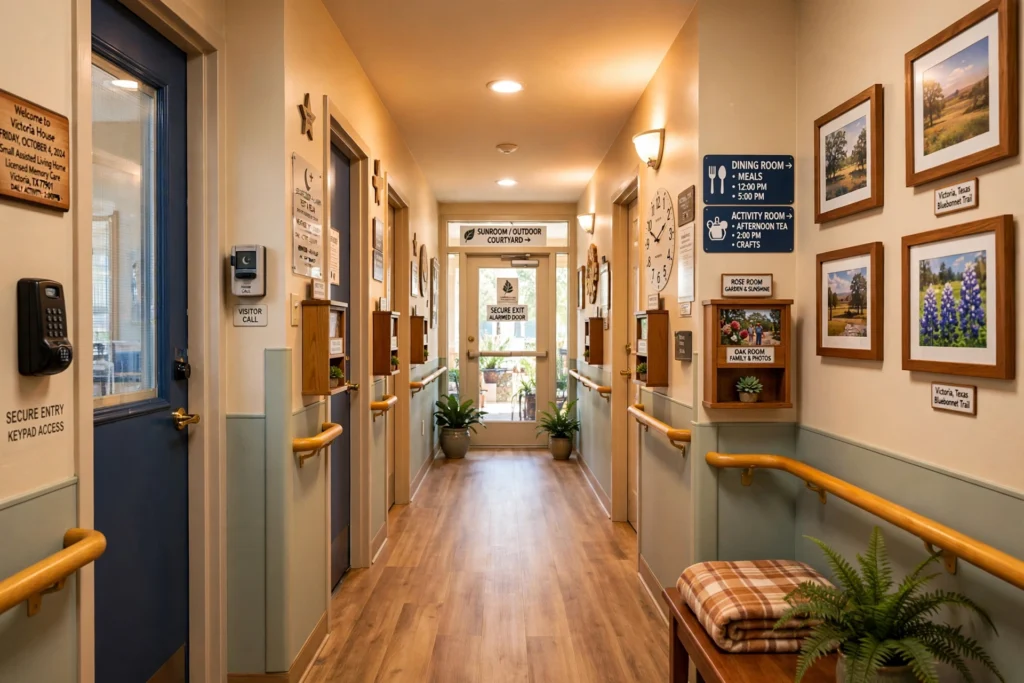
- A secured environment. Locked or alarmed exits, enclosed courtyards, and layouts that prevent unsafe wandering while still giving residents the freedom to move about.
- Specially trained staff. Caregivers trained in dementia communication, redirection, and de-escalation, people who understand that a so-called “difficult behavior” is usually an unmet need.
- Structured routines. Consistent daily rhythms with meaningful activities designed to reduce anxiety, agitation, and sundowning.
- Lower staff-to-resident ratios. More eyes, more hands, and more one-on-one attention than general assisted living can provide.
For independent guidance on dementia and care options, the Alzheimer’s Association offers a free 24/7 helpline and planning resources for families comparing memory care Victoria TX options.
Signs Your Loved One Needs Memory Care
Dementia progresses differently for everyone, but certain red flags tell you that home, or even standard assisted living, is no longer enough:
Safety concerns
- Wandering or getting lost in familiar places
- Leaving the stove on or forgetting running water
- Falls, or unsafe driving
Struggles with daily living
- Missed medications or double-dosing
- Declining personal hygiene or wearing the same clothes for days
- Unexplained weight loss or spoiled food in the fridge
Behavioral changes
- Sundowning: increased confusion or agitation in late afternoon and evening
- Aggression, paranoia, or accusations aimed at family
- Withdrawal from friends, hobbies, and conversation
Caregiver burnout
- Your own health is declining from stress and lost sleep
- You feel resentful, guilty, or afraid to leave them alone
- Family conflict over care decisions is escalating
If several of these sound familiar, a free care assessment can give you an honest, professional read on where your loved one stands.
Costs of Memory Care Victoria TX (2026)
The median cost of memory care Victoria TX runs about $4,258 per month, while the Texas statewide average falls between $4,569 and $5,666 per month. Memory care typically costs 20–30% more than standard assisted living because of higher staffing ratios, specialized training, and a secured environment.
| Care option | Typical monthly cost (Victoria, TX) |
|---|---|
| Memory care | ~$4,258–$5,500 |
| Assisted living | ~$3,300–$4,900 |
| In-home care (40 hrs/week) | ~$4,800+ |
What drives the price? Level of care needed, room type (private vs. companion suite), community size and amenities, and whether pricing is all-inclusive or tiered by care level.
Five pricing questions to ask every community:
- Is this an all-inclusive rate, or are there care levels with added fees?
- What exactly triggers a move to a higher care level — and how much does it cost?
- Are medication management, incontinence care, and escorts to meals included?
- How much notice do you give before a rate increase?
- If funds run out, do you accept Medicaid, or would we have to move?
Wondering how families actually afford it? Read our Texas funding guide for seven ways to pay for care.
What to Look for on Tours
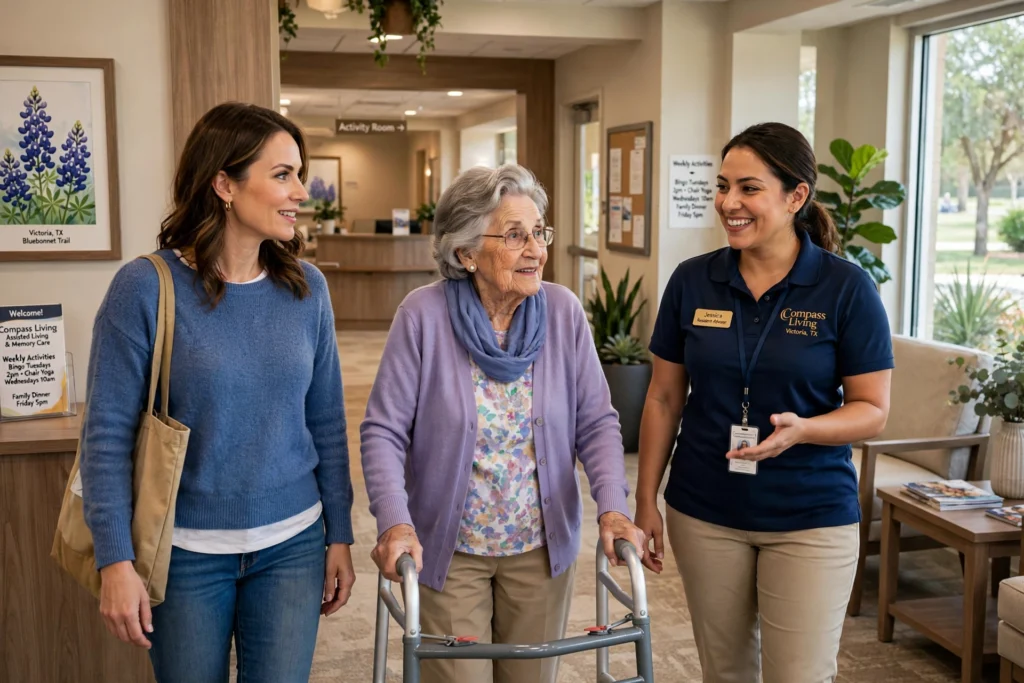
Brochures all look the same. The tour is where the truth comes out. Visit at different times of day, including a weekend, and watch closely. We’re just minutes from DeTar Hospital and Citizens Medical Center, so many families stop by for a tour before or after an appointment. Afterward, many take a quiet walk at nearby Riverside Park to talk things over.
The environment
- Clean, odor-free, with natural light and comfortable temperatures
- Secure outdoor space where residents can enjoy fresh air safely
- Calm noise level: no blaring TVs or chaotic hallways
The people
- Staff greet residents by name, with warmth and patience
- Caregivers can describe their dementia training specifically
- Low turnover: familiar faces matter enormously to dementia residents
The program
- Structured daily activities, not just a TV in a common room
- Individualized care plans that are reviewed regularly
- Clear family communication: care conferences, updates, open doors
The practical details
- Current Texas state license and a clean inspection history
- Published staffing ratios for day, evening, and overnight shifts
- Generous visiting hours and family involvement
7 Questions to Ask Before You Choose
- What specific dementia training does every caregiver complete, and how often is it refreshed?
- What is your staff-to-resident ratio during the day, evening, and overnight?
- How do you handle wandering, agitation, or sundowning without restraints or heavy sedation?
- How are care plans created, and how often are families updated on changes?
- What does a typical day actually look like for a resident here?
- How do you support families: support groups, care conferences, open communication?
- Can residents age in place here, or will we face another disruptive move later?
The answers, and the comfort with which they’re given, will tell you everything about a community’s dementia philosophy.
How Silver Serenity Supports Dementia Residents
Silver Serenity Assisted Living is a small, 16-bed memory care Victoria TX home designed to feel like home, not a facility. For residents living with dementia, that small scale makes all the difference. When a family from Edna called us last spring, worried about their dad’s sundowning, they told us they’d already toured three large facilities where he would have been just another room number. By the end of his first week here, our caregivers knew his name, and his love of morning coffee on the porch:
- 24/7 awake, dementia-aware staff who know every resident personally: their histories, preferences, and the little things that bring them comfort.
- Individualized care plans built with families and adjusted as needs change.
- A safe, secure setting with enclosed outdoor spaces, so residents enjoy freedom without risk.
- True family partnership: open communication, care conferences, and a team that treats you like part of the care circle.
- 5.0-star reviews from local families who trusted us with the people they love most. Read their stories.
Explore our assisted living and memory care services to see everything included in daily life at Silver Serenity.
Memory Care vs. Nursing Home: Which Is Right?
| Memory care | Nursing home | |
|---|---|---|
| Best for | Dementia requiring supervision, structure, and engagement | Complex medical needs requiring skilled nursing |
| Medical care | Medication management and daily living support | 24/7 skilled nursing, wound care, rehabilitation |
| Environment | Home-like and secured | Clinical |
| Typical cost | Lower | Higher |
If your loved one’s primary need is dementia support rather than around-the-clock medical treatment, memory care in a home-like setting is usually the better, and more affordable, fit. Touring memory care Victoria TX communities in person is the best way to compare.
Frequently Asked Questions
What’s the difference between memory care and assisted living?
Assisted living supports seniors who need help with daily activities like bathing, meals, and medications. Memory care adds secured environments, dementia-trained staff, structured routines, and lower ratios specifically for people with Alzheimer’s and other dementias.
How much does memory care cost in Victoria, TX? The median memory care Victoria TX cost is about $4,258 per month, with most communities ranging from roughly $4,258 to $5,500 depending on care level and room type. Always ask whether the quoted rate is all-inclusive.
Does Medicare pay for memory care?
No. Medicare doesn’t cover room, board, or custodial care in memory care communities. It may cover short-term skilled nursing or hospice, but families typically pay privately, use long-term care insurance, or qualify for Texas Medicaid programs. See our Texas funding guide for details.
When is the right time to move a loved one into memory care? Safety is the clearest signal: wandering, unsafe cooking, falls, or getting lost. Earlier moves are often easier: your loved one can settle in, form relationships, and build routines while still able to adapt. Families considering memory care Victoria TX often find an earlier move leads to a smoother transition.
How does a small home handle dementia differently than a large facility?
In a 16-bed home like Silver Serenity, every caregiver knows every resident. There are no long hallways to get lost in, no rotating cast of strangers, and routines stay consistent, all of which reduce anxiety and agitation for people with dementia.
What should I bring or ask on a memory care tour?
Bring the seven questions above, visit more than once (including an evening or weekend), observe staff-resident interactions, and ask for the community’s state license and most recent inspection results.
Take the Next Step
Choosing memory care is one of the hardest, and most loving, decisions a family can make. You don’t have to make it alone. Call us at (361) 579-0784 for a free, no-pressure chat, or schedule a tour and a free care assessment. We’ll give you an honest recommendation, even if we’re not the right fit.
Not ready for full-time care? Our respite care in Victoria, TX offers short-term stays with the same dedicated, dementia-aware support.